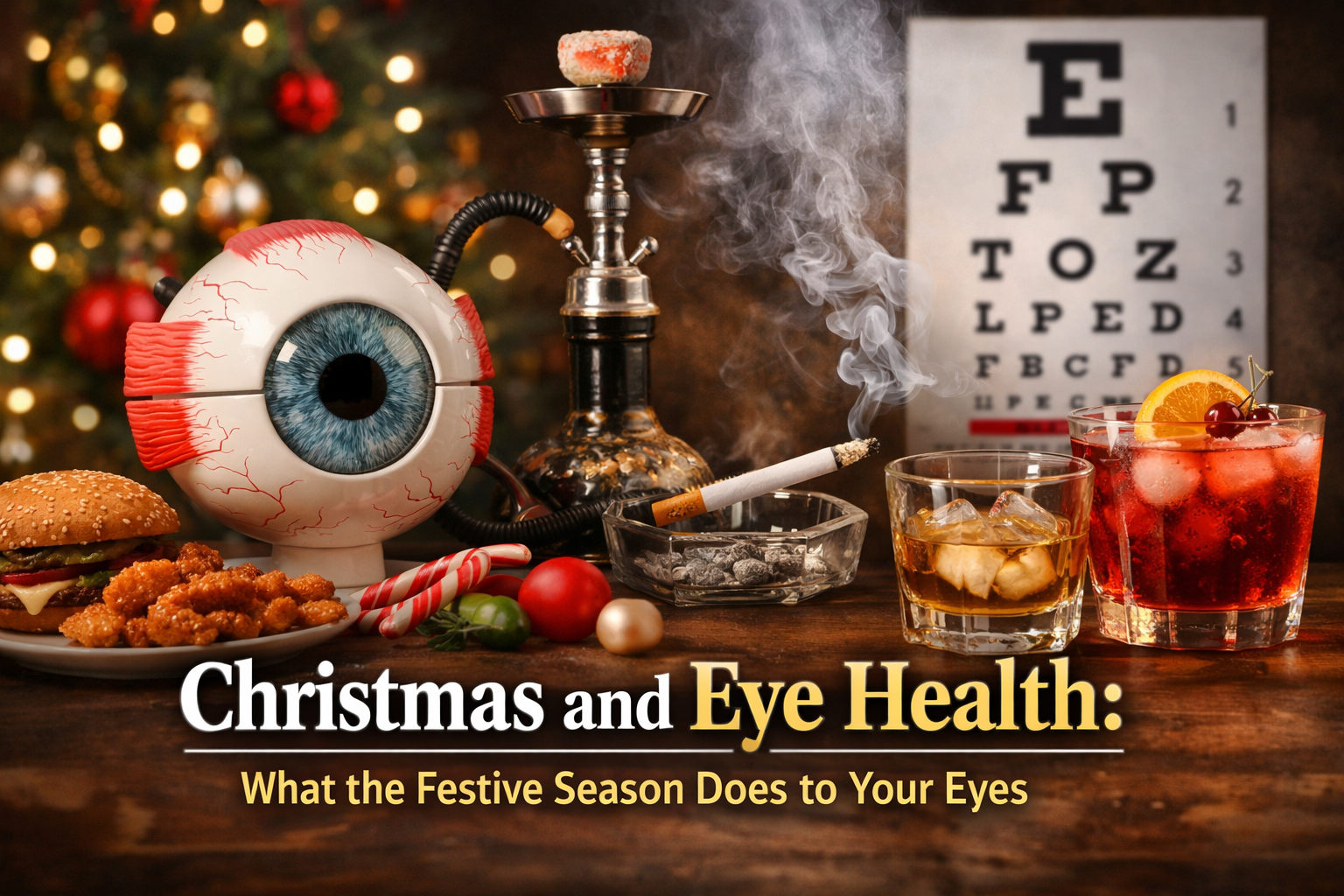
Christmas and Eye Health: What the Festive Season Does to Your Eyes
Posted on Dec 20, 2025 by Timothy Khabusi
Category: Eye Health
Christmas is a season of joy, connection, travel, food, and celebration. Families reunite, routines relax, and for a brief moment, life feels lighter. However, hidden beneath the festivities is a subtle shift that often goes unnoticed: our eye health quietly takes a back seat.
During the festive season, lifestyle changes—some temporary, others excessive—can have real consequences on the eyes. While Christmas itself isn’t harmful, the habits that come with it can strain, irritate, and sometimes endanger our vision.
Christmas: A Season of Joy—and Neglect
The Christmas period disrupts normal routines. Bedtimes are pushed later, alcohol consumption increases, diets change, and healthcare appointments are postponed. When discomfort arises—red eyes, headaches, blurred vision—it’s often ignored with the promise of “I’ll deal with it after the holidays.”
Unfortunately, the eyes are not immune to neglect. They respond quickly to dehydration, smoke exposure, poor sleep, and nutritional imbalance—all common during festive celebrations.
Alcohol and the Eyes
Alcohol is a central feature of many Christmas celebrations. While low-moderate consumption may not lead to significant consequences, excessive alcohol intake can affect the eyes in several ways:
Dehydration, which worsens dry eye symptoms
Bloodshot or irritated eyes due to dilated blood vessels
Increased eye strain and headaches
Reduced coordination and judgment, increasing the risk of eye injuries
Alcohol doesn’t directly damage the eyes overnight, but its indirect effects can make existing eye conditions more uncomfortable and noticeable. "Bad alcohol", containing methanol, can actually cause blindness. For this reason, uncertified alcoholic drinks should only be touched with a long stick.
Smoking, Hookah, and Festive Social Habits
Festive gatherings often involve smoking—cigarettes, cigars, or hookah—especially in social settings. Smoke exposure, whether active or passive, irritates the ocular surface.
Common effects include:
Burning or gritty sensations
Redness and watering
Worsening of dry eye disease
Increased sensitivity to light
Hookah, often perceived as safer, produces dense smoke that can be just as irritating to the eyes, particularly in enclosed or poorly ventilated spaces.
Processed Foods, Sugar, and Vision
Christmas diets tend to be rich in sugar, salt, and processed foods. While indulgence is part of the celebration, these dietary changes can influence eye health:
Blood sugar fluctuations may cause temporary blurred vision
People with diabetes or pre-diabetes may experience more pronounced visual changes
Reduced intake of fruits and vegetables means fewer antioxidants that support long-term eye health
These effects are often temporary but can be alarming—especially when people are unaware of the connection.
Late Nights, Screens, and Holiday Travel
Long nights, increased screen use, and travel are hallmarks of the festive season.
Sleep deprivation leads to eye fatigue and poor focus
Extended screen time increases the risk of digital eye strain
Dust, air conditioning, and long-distance driving contribute to dry and irritated eyes
By the end of the holiday period, many people notice persistent tiredness in their eyes without realising why.
Why People Avoid Eye Care During Christmas
Healthcare-seeking behaviour often dips during Christmas. Clinics may be closed, travel disrupts appointments, and symptoms are dismissed as minor or temporary.
This delay can be risky. Some eye conditions worsen quietly and benefit from early attention. Ignoring warning signs simply because it’s “the festive season” can lead to avoidable complications.
Simple Eye-Smart Tips for the Festive Season
Enjoying Christmas doesn’t mean neglecting your eyes. A few small habits can make a big difference:
Stay well hydrated
Take regular breaks from screens
Moderate alcohol consumption
Avoid smoky environments where possible
Seek professional care for persistent pain, redness, or sudden vision changes
These steps are practical, realistic, and festive-proof.
Final Thought
Christmas is meant to be enjoyed—and it should be. But caring for your eyes ensures that you can fully enjoy not just this festive season, but many more to come.
As you celebrate, remember: your eyes are part of the celebration too.
Merry Christmas!

Timothy Khabusi
Optometrist, Innovator and Lifelong Learner. Dedicated to making eye care and science accessible and impactful.
Leave a Comment
Comments
No comments yet. Be the first!